
Art Science Research on Underwater Acoustic Ecology
The Concept
Silent Pollution is an artist-led art-science project investigating underwater sound and anthropogenic noise in freshwater and marine environments. Using hydrophone recordings, spectral analysis and physical sound installation, the project documents human-generated underwater sound and explores how it may alter aquatic acoustic environments. It translates an environmental condition normally hidden from human perception into sound, vibration and movement.
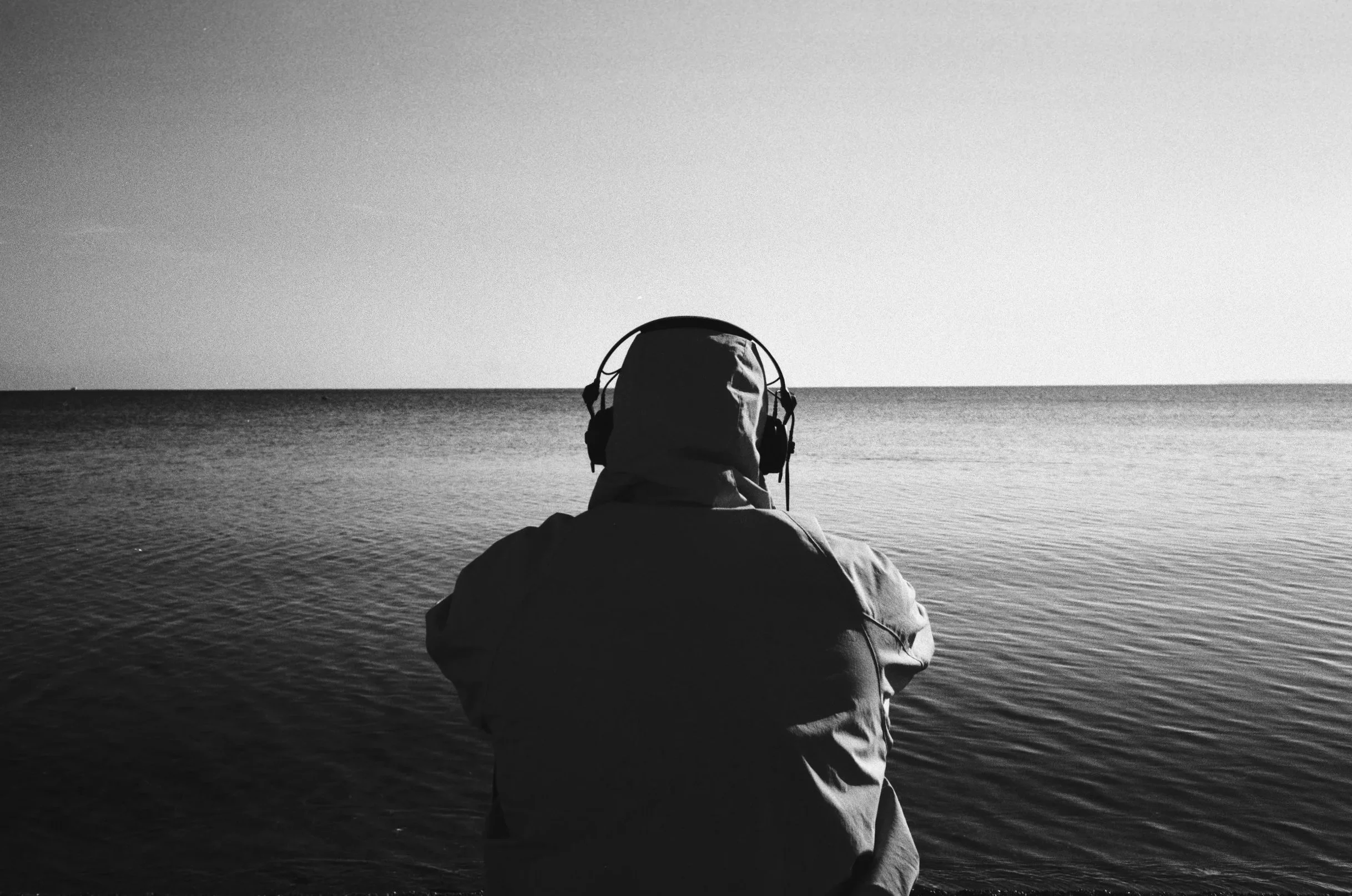
“We do not experience underwater acoustic pollution through statistics alone. By listening to Lake Sevan and translating its underwater soundscape into physical experience, an invisible environmental pressure becomes perceptible.”
Research anchors
≈7.5 Hz
CHARACTERISTIC RESPONSE OBSERVED IN A 2020 HYDROACOUSTIC STUDY OF LAKE SEVAN
>20 Hz
THE SAME STUDY REPORTED MAXIMA ASSOCIATED WITH ARTIFICIAL ACOUSTIC SOURCES ABOVE APPROXIMATELY 20 HZ
PARTICLE MOTION
A PRIMARY ACOUSTIC STIMULUS DETECTED BY ALL FISHES
RESEARCH GAP
DIRECT NOISE-EFFECT STUDIES ON SEVAN TROUT AND LAKE SEVAN WHITEFISH HAVE NOT YET BEEN IDENTIFIED IN THE SELECTED SCIENTIFIC LITERATURE
GLOBAL CONTEXT — LOW-FREQUENCY SHIPPING NOISE
Global marine context: Over the past 50 years, increased shipping is estimated to have contributed to a 32-fold increase in low-frequency noise along major shipping routes.
Source: Duarte et al., Science, 2021.
Research Phases
PHASE 1: Lake Sevan (ARMENIA)
In Progress 2025-2026
Research location
Lake Sevan, Armenia. Elevation: 1,900m.
Surface area: 1,242 km²
Maximum depth: 79.4 m
Home to the critically endangered endemic Sevan trout (Salmo ischchan).
A 2020 hydroacoustic study of Lake Sevan identified a characteristic response around 7.5 Hz, documented reverberation, and recorded acoustic signals associated with artificial sources including a boat and a passing cargo train. The study establishes Lake Sevan as a measurable and complex acoustic environment; it did not test biological effects on fish.
Institute of Applied Problems of Physics, NAS RA, 2020.
Recording sessions
DATE
2025/26-Winter
2025-Autumn
2026-Spring
2025-Summer
DEPTH
10m
5m
2-5m
2-5m
TIME
13:00-14:00
Variable
10:00-11:00
Variable
LOCATION
Deep Basin (Center Lake)
Spawning Grounds
Big Sevan Artanish
Small Sevan Shorja
DURATION
1 hour
1 hour
1 hour
1 h AM, 1 h PM
STATUS
Completed
Completed
Completed
Completed
Acoustic analysis preview
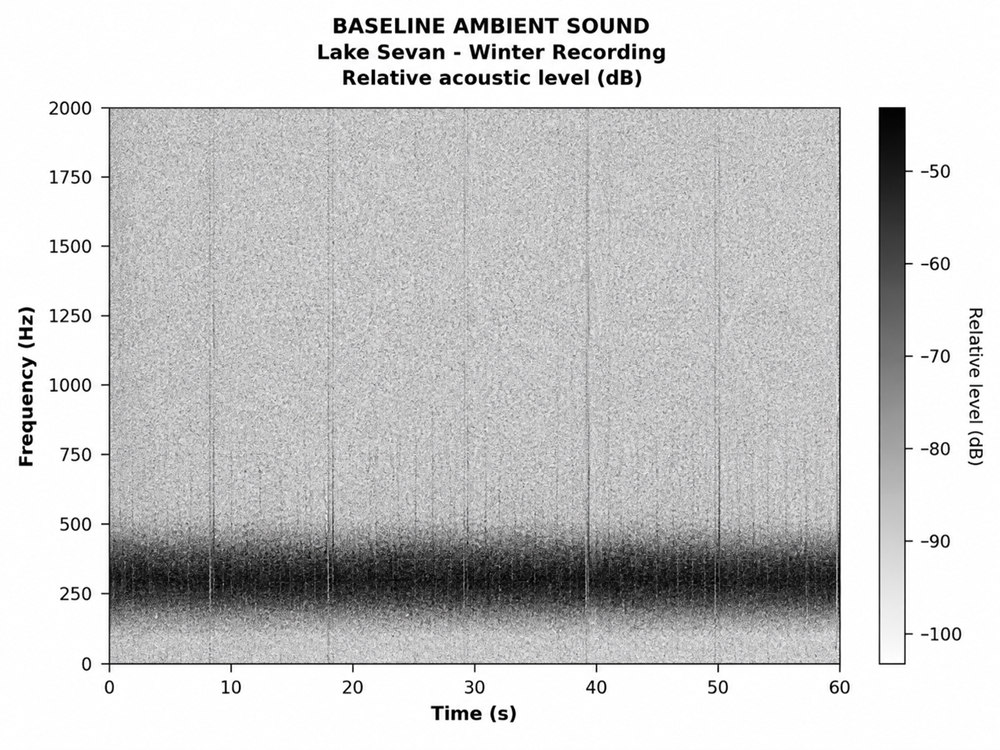
LOW HUMAN-ACTIVITY AMBIENT
Winter Recording: Deep-basin recording made during a period of relatively low observed human activity. The recording documents ambient underwater acoustic conditions and other identifiable acoustic events.
Analysis Focus: Relative acoustic level, frequency distribution, temporal variation, and identification of biological or anthropogenic acoustic events where attribution can be scientifically supported.
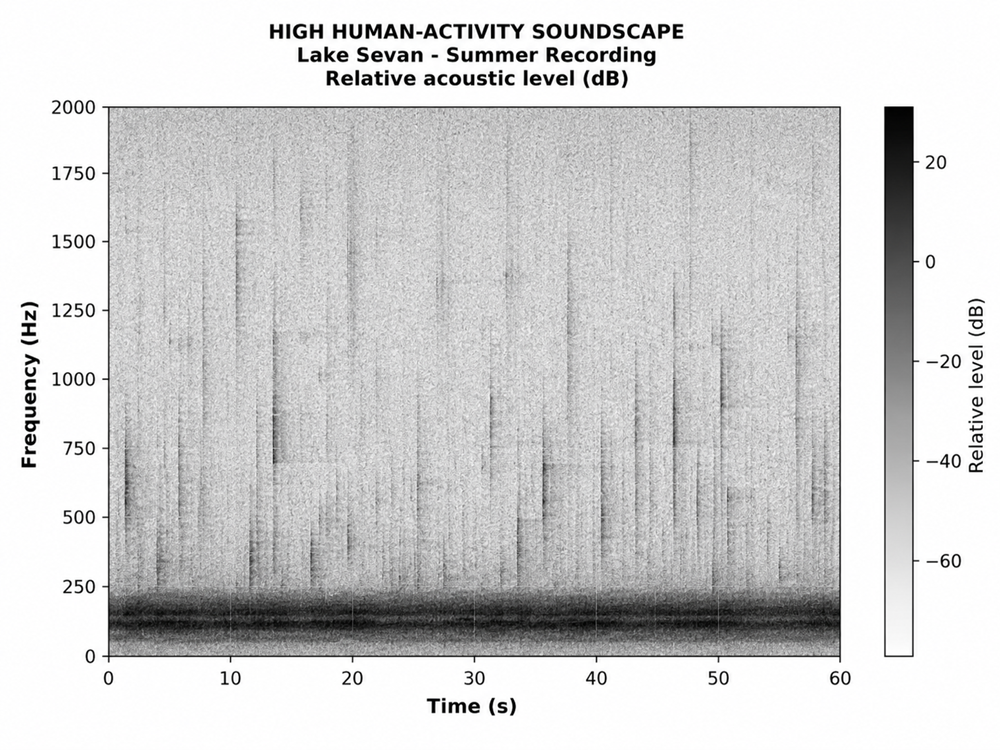
HIGH HUMAN-ACTIVITY SOUNDSCAPE
Summer Recording: Underwater recording from the Shorja area during a period of increased recreational activity, with motorboats and personal watercraft observed in the surrounding area. Individual acoustic events are attributed to specific sources only where supported by field observation and spectral analysis.
Analysis Focus: Identification of likely anthropogenic acoustic events, dominant frequency ranges, relative acoustic levels, and their spectral overlap with the surrounding underwater soundscape.
PHASE 2: Mediterranean Basin
Planned 2026-2027
During Phase 2, Silent Pollution will expand into marine ecosystems in Italy and Spain, tracing acoustic pollution from freshwater sources through coastal zones into the open sea. The research will include collaborative workshops and live listening sessions with blind and visually impaired communities, emphasizing audio perception as a primary form of environmental knowledge. The phase will culminate in an expanded physical sound installation integrating recordings and acoustic data from freshwater and marine environments, tracing how anthropogenic sound changes across different aquatic ecosystems.
Centre for Marine Science & Technology Curtin University

Scientific Advisor
Juan Carlos Azofeifa-Solano, PhD
Underwater acoustics researcher / scientific advisor
The Centre for Marine Science & Technology (CMST) at Curtin University, established in 1985 in Perth, Western Australia, is a premier research facility specializing in underwater acoustics, marine bioacoustics, and marine habitat mapping. It serves industry and government, with expertise in soundscapes, noise impacts, and marine technology.
Methodology
FIELD SOUNDSCAPE DOCUMENTATION
High-fidelity underwater recordings across locations, depths and seasons. Biological sounds are identified and attributed only where scientifically supported, creating a growing acoustic archive of Lake Sevan.
ANTHROPOGENIC SOUND COMPARISON
Compare periods of lower and higher human activity through spectral and sound-level analysis. Document changes in frequency content, temporal patterns and the presence of identifiable anthropogenic sources.
TEMPORAL & SPATIAL COMPARISON
Multi season comparison of same recording sites. Document seasonal acoustic variations. Compare recurring recording sites across seasons to document changes in underwater acoustic conditions and explore relationships with environmental and biological activity.
Hydrophones record sound pressure. Fishes perceive underwater sound differently from humans: particle motion is a fundamental acoustic stimulus for all fishes, and salmonids are particularly associated with low-frequency particle-motion sensitivity. Silent Pollution therefore uses hydrophone recordings to document the acoustic environment rather than claiming to reproduce exactly what a fish perceives.
Why sound and vibration?
Underwater sound is not only pressure; it also involves the movement of particles in the water. Particle motion is a primary acoustic stimulus for fishes. Silent Pollution translates recorded acoustic information into sound, vibration and visible water movement — not as a simulation of fish hearing, but as a human-scale way of perceiving a physical component of the underwater acoustic environment.
Installation
Silent Pollution transforms underwater recordings from Lake Sevan into sound, vibration and movement.
At the center of the installation, a shallow surface of water responds to acoustic information extracted from anthropogenic underwater recordings. A low-frequency vibration system generates changing ripples and patterns across the surface.
Visitors use a four-channel analogue console to introduce and combine different anthropogenic underwater recordings against the ambient underwater soundscape of Lake Sevan. Each recording remains connected to its source, location, depth and acoustic data.
The installation transforms an underwater condition normally outside human perception into something that can be heard, seen and physically experienced.
The installation does not reproduce fish hearing and does not present a universal damage threshold. It translates measured acoustic information into a physical experience for human perception.
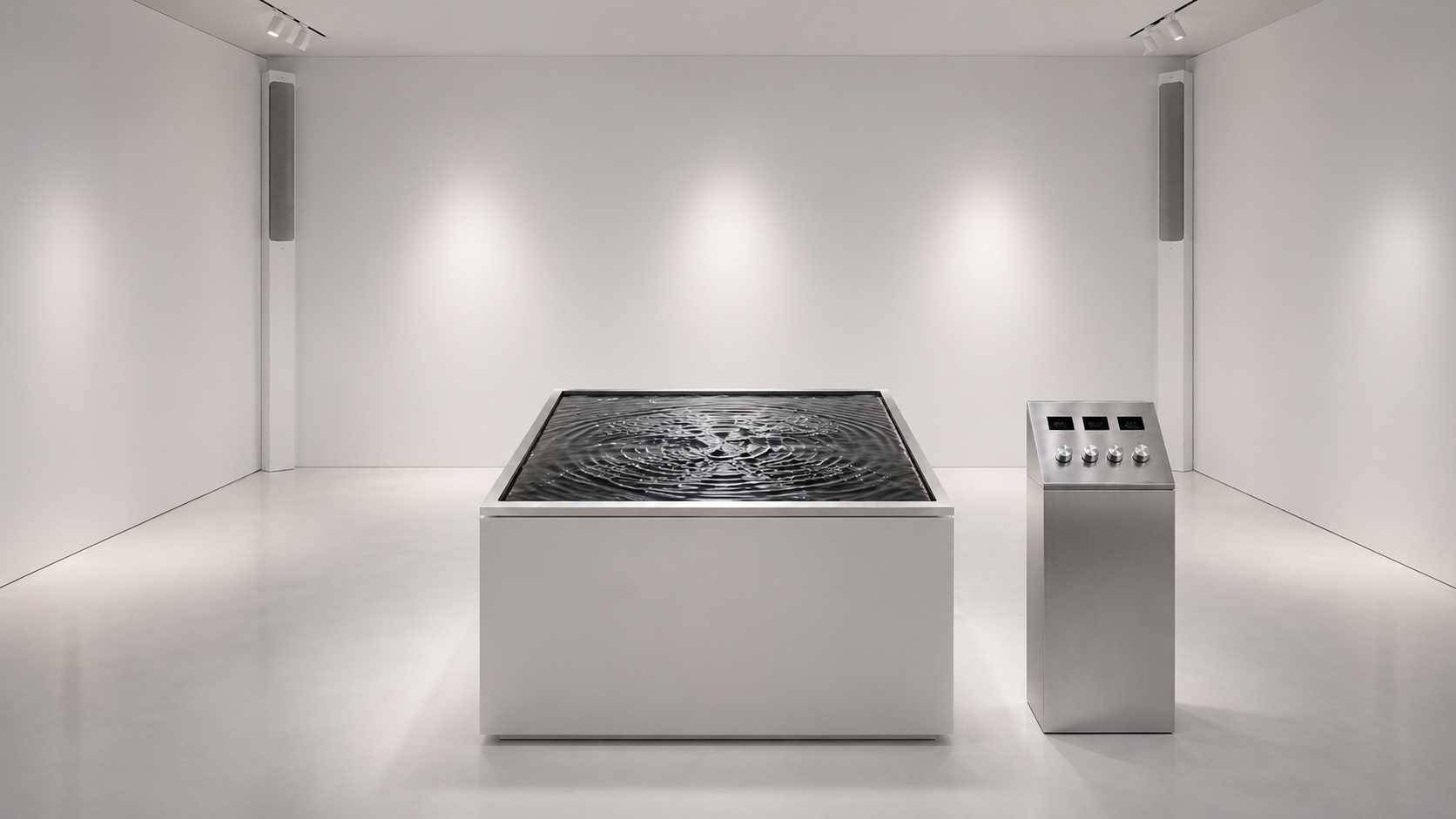
Concept visualization of the proposed installation.
HYDROPHONE
Aquarian H2A
RECORDING EQUIPMENT
RECORDING FORMAT
24-bit / 48 kHz
SENSITIVITY
-192 dB re 1V/μPa
POLAR PATTERN
Omnidirectional
MAX DEPTH
20 meters
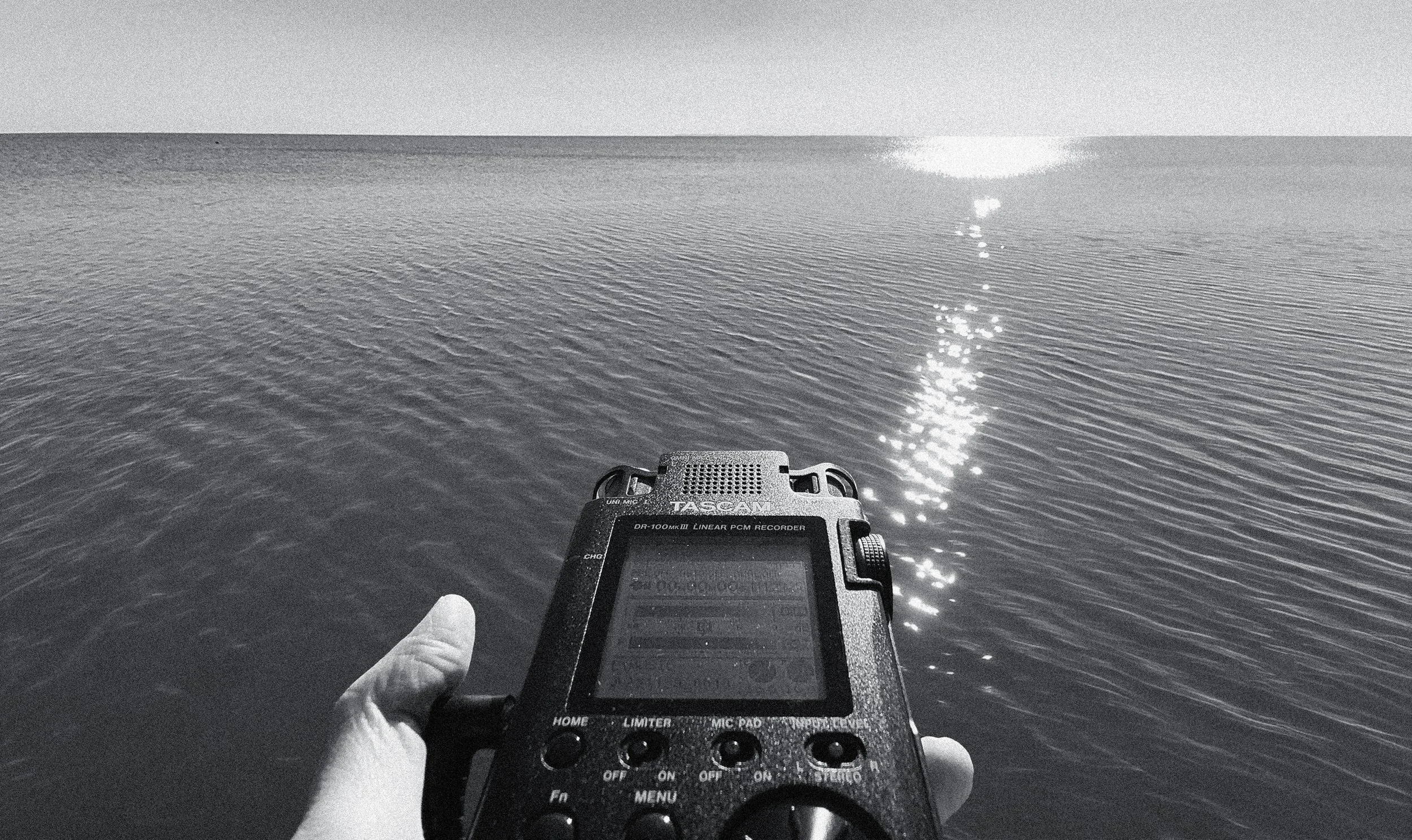
RECORDING DEVICE
MIXPRE-3 II
Impact & Outcomes
PUBLIC AWARENESS
Make underwater acoustic pollution perceptible as an environmental pressure, allowing audiences to experience how human-generated sound can alter aquatic acoustic conditions.
SCIENTIFIC CONTRIBUTION
Build a documented acoustic archive of Lake Sevan and compare underwater acoustic conditions across locations, seasons and periods of different observed human activity.
CONSERVATION ADVOCACY
Create an evidence-based platform for discussing underwater noise, acoustic habitat and future species-specific research in Lake Sevan.
ART-SCIENCE MODEL
Explore how artistic methods and scientific research can create new ways of perceiving and discussing environmental change.
Why This Matters
Underwater noise is an environmental pressure that remains largely outside human perception. Aquatic animals experience sound through sensory systems different from our own, and anthropogenic noise can alter acoustic conditions, interfere with biologically relevant signals and affect behaviour depending on species, source and exposure.
Silent Pollution makes these changing acoustic conditions perceptible without claiming to reproduce an animal's subjective hearing. Through field recordings, scientific analysis and physical translation, the project creates a bridge between environmental research and human experience.
“We protect what we understand. Silent Pollution invites us to perceive an acoustic world normally hidden from human senses — and to reconsider our presence within it.”